Teaching Your Cockapoo Puppy to Use Toilet Training Bells
Posted on 2nd February 2026
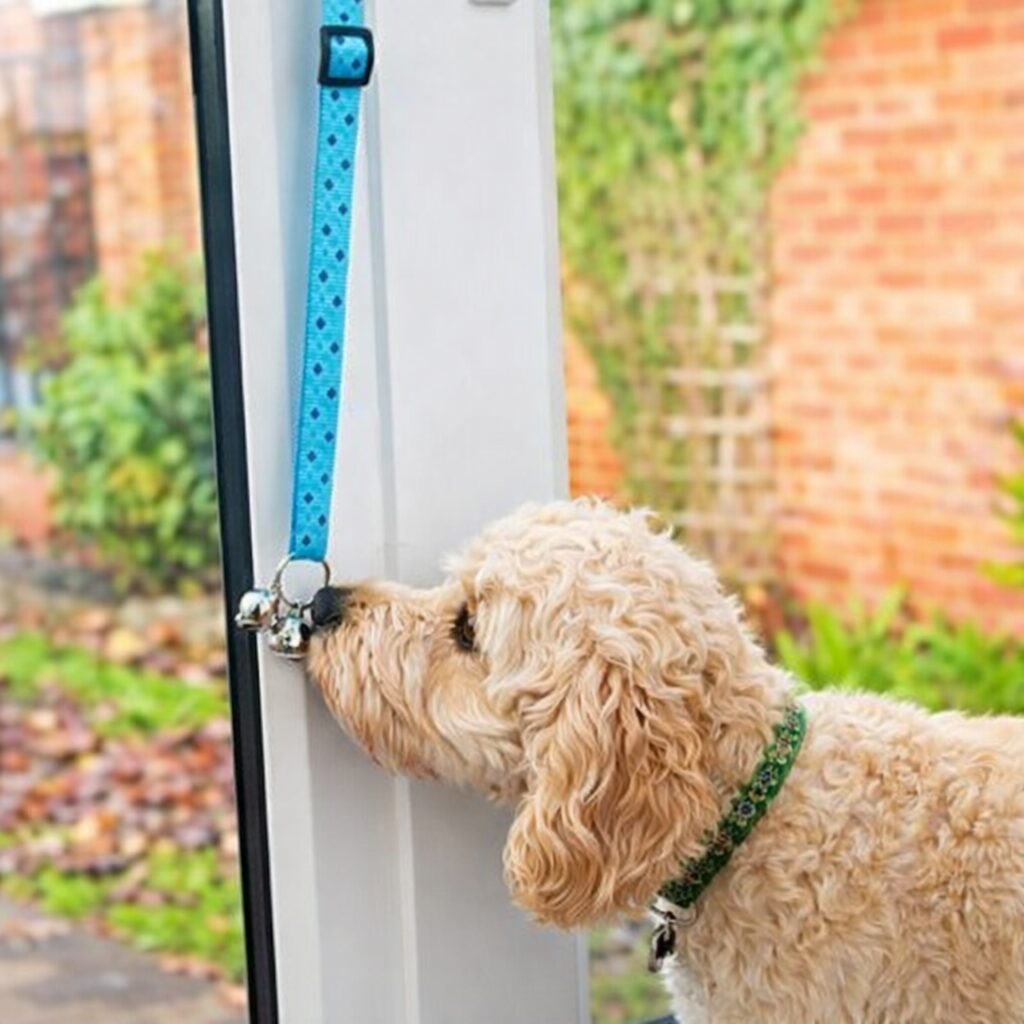
Teaching your Cockapoo puppy to use bells for toilet training is a cute and useful method, but it will require some training skills.
Dogs learn through being rewarded for behaviours, so your puppy needs to learn what got them access to outside — and you’ll need good timing.
Because bells make a noise, some puppies will need a gentle introduction if they’re worried by new sounds.
Recommended toilet training bells: Toilet training bells (Amazon)
As an Amazon Associate I earn from qualifying purchases.
Before You Start: Set Your Bells Up for Success
- Hang the bells on the door you’ll use most for toilet trips.
- You want this to be close to the area where your puppy spends most of the time so there is not a long distance for your puppy to travel
- Make sure at least one bell sits at nose height so your puppy can reach it easily.
- Use small, soft treats that are quick to eat (avoid crunchy or chewy treats that slow you down).
- Keep sessions short (30–60 seconds) and stop while your puppy is still relaxed.
Step 1: Sound Association
- Lay the bells on the floor.
- Have some treats in your hand that your puppy wants to eat.
- Make sure these are small and easy to eat - avoid crunchy or chewy treats.
- Gently move the bells until they make a noise, and as they do, give a treat.
- Watch for any signs of worry - backing away, ears back, lip licking.
- If you see these, go slower and make the bells quieter.
- Once you can see your puppy anticipating or looking for the treat when they hear the sound, you can move to step 2.
Step 2: Location
- Hang your bells on the door - make sure one is hanging at head height for your puppy. You want them to reach easily and not have to stretch up or lower their heads too far.
- Have your treats in your hand.
- Place a treat behind the bells.
- When your puppy noses to get the treat, watch for them to touch the bell with their nose.
- When you see this, at the exact moment of touch, say yes and release the treat.
- Try and feed your puppy right by the bell rather than taking your hand away and feeding away from the bells.
- Avoid using any words or cues, as you won’t be asking your puppy to do this, it will be a behaviour they do to get you to open the door.
- All you need is a “yes” when they get it right.
Step 3: Changing Rewards
Ultimately, we want the reward for ringing the bell to be access outside.
- When your puppy touches the bell, open the door and throw the treat outside.
- When they come back in, close the door and repeat.
- See if you can notice your puppy anticipating the door opening after they have rung the bell.
Step 4: Using for Toilet Training
- Have your puppy on a toilet training schedule.
- Each time, go to the door with them.
- Wait for them to touch the bell and then open the door and go out.
- Be patient with the waiting, try not to say anything here - this is important.
- Your puppy will work out that the way to get the human servant to open the door is to ring the bell.
For more general toilet training help, read here
When You’re Not There
If you are not present and your puppy has access to the area where the bells are situated, you must open the door when they ring the bell when training this behaviour.
If you can’t be there, or may not hear them, take the bells away so they are not available and re-hang them when you are around.
Issues with Bell Training
Some dogs enjoy being outside, especially Cockapoos. Their high chase drive may mean they want access to the garden for chasing birds, squirrels and seeing off the neighbourhood sounds.
This means that they may ring the bells to gain access to outside and not only when they need the toilet. The best way to overcome this is to try and put toileting on a schedule as much as you can.
Some dogs may use their paw to ring the bell instead of their noses which can result in scratch marks on your door.
Closing thoughts
Toilet training bells can be a simple, effective way to help your Cockapoo puppy communicate when they need to go outside. Keep the training calm, reward the right moments with good timing, and gradually make the real reward the door opening and access outside. If your puppy starts ringing the bells “just for fun,” tighten up your toilet schedule and keep trips brief and boring. With consistency, most Cockapoos quickly learn that ringing the bell is the polite way to ask for a toilet break.
FAQ: Cockapoo Puppy Toilet Training Bells
How long does it take to bell train a Cockapoo puppy?
What age can you start toilet bell training?
Should I teach a cue like “ring the bell”?
My Cockapoo rings the bells just to go outside—what do I do?
What if my puppy is scared of the bell sound?
Do I still need a toilet training schedule if I use bells?
My puppy paws the bells and scratches the door—how can I stop that?
What if my puppy rings the bell and doesn’t wee?
Supporting Blogs:
Teaching Your Cockapoo Puppy to Use Toilet Training Bells
Resources:

The Calm Puppy Reset: Helping Your Cockapoo Puppy Settle, Focus, and Feel Safe
Help! My Puppy is a Landshark Webinar
Freebies:

The Cockapoo Puppy 7 Day Guide

3 Minute Morning Reset Guide