Why Your Cockapoo Puppy Gets Worse in the Evenings
Posted on 15th May 2026
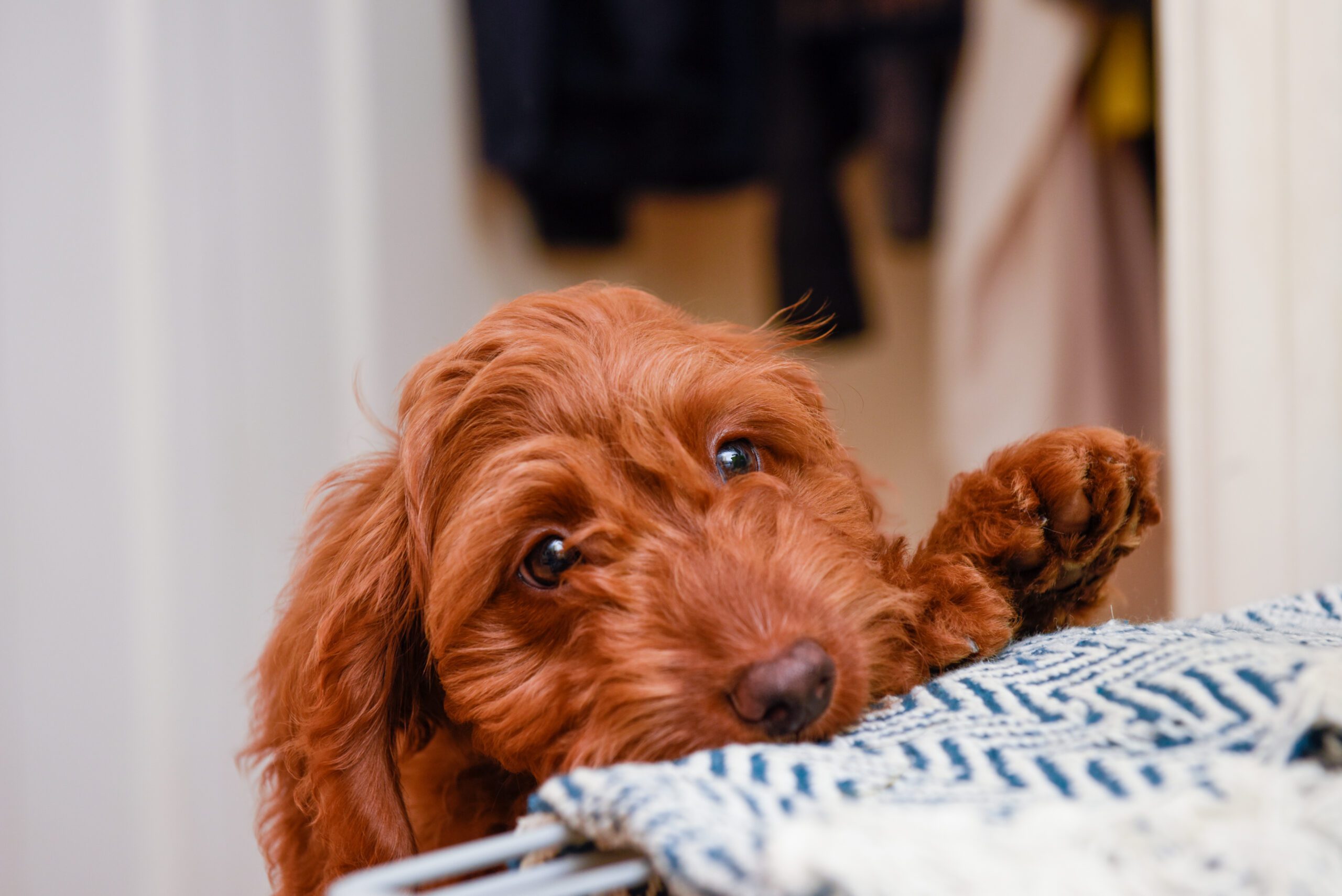
You make it through the day feeling fairly hopeful. Your Cockapoo puppy has had walks, training, cuddles and enrichment. Then suddenly, around 6pm onwards, everything changes.
The biting starts again.
They launch themselves at the sofa.
They chase the cats.
They growl when you move them away from something.
They seem wild, overexcited and completely unable to settle.
And honestly? It can feel quite upsetting when your lovely puppy suddenly turns into what feels like a tiny furry tornado every evening.
The good news is this is incredibly common in Cockapoo puppies — and it usually does not mean you have an aggressive, dominant or “bad” dog.
In many cases, your puppy is not being naughty. They are overtired, overstimulated and struggling to regulate themselves.
If your puppy also struggles to switch off during the day, you may find my Cockapoo Puppy Sleep Guide helpful.
Why Is My Cockapoo Puppy Hyper in the Evening?
This is one of the most common things Cockapoo owners search for:
“Why does my puppy go crazy at night?”
Cockapoos are sensitive, busy little dogs. They notice everything. They stay switched on for long periods and many of them struggle to naturally “power down” when they are tired.
Instead of getting sleepy and calm, overtired puppies often become:
- bitey
- frantic
- zoomy
- barky
- clingy
- unable to settle
Very much like an overtired toddler.
Owners often tell me: “It’s like he fights sleep.”
That is actually a very accurate way of describing it.
Your puppy’s nervous system becomes overloaded and instead of resting, their body tips into chaotic behaviour.
Why Does My Puppy Bite More in the Evening?
Evening biting is one of the biggest signs that your puppy is struggling rather than “misbehaving”.
Many owners notice:
- grabbing clothes
- biting hands and ankles
- jumping up and biting sleeves
- pawing and mouthing on the sofa
- frustration when touched or moved
This often happens because your puppy has reached the end of what they can cope with emotionally that day.
By evening time they may be:
- mentally exhausted
- overstimulated
- needing sleep
- struggling with frustration
- finding it harder to regulate excitement
The important thing to understand is this:
Your puppy is usually not trying to challenge you.
They are dysregulated.
And when owners understandably respond with more frustration, more excitement, louder voices or physical handling, the puppy often escalates further.
This is also why many owners notice puppy biting becomes far worse later in the day. Overtired puppies often lose the ability to regulate themselves calmly, which can lead to grabbing clothes, biting hands and frantic behaviour. You can also read my guide on How to Stop Cockapoo Puppy Biting for more help with this stage.
Still dealing with the biting?
If you're here, chances are it's still happening. Take the free Puppy Biting Quiz to find out exactly where your puppy sits — and what actually helps next.
Why Won’t My Cockapoo Puppy Settle at Night?
A huge mistake many owners make is assuming a hyper puppy needs more exercise.
In reality, many Cockapoo puppies who become wild in the evenings are already doing too much.
Too many walks.
Too much freedom.
Too much stimulation.
Too much interaction all day long.
A tired nervous system does not always create a sleepy puppy. Sometimes it creates a frantic one.
If your puppy:
- paces constantly
- jumps on and off furniture
- digs beds or blankets
- mouths everything
- zooms repeatedly
- cannot lie down for more than a few seconds
…they are often telling you they cannot switch themselves off.
This is where calm structure becomes incredibly important.
Many owners are surprised to learn that trying to tire their puppy out more can actually make evenings harder. Overtired Cockapoo puppies often need more calm structure and better rest opportunities instead of more stimulation. This is something I cover in much more detail inside The Calm Puppy Reset.
Why Does My Puppy Dig Beds and Furniture Before Settling?
Many owners notice strange repetitive behaviours in the evening:
- digging beds
- scratching sofas
- snuffling down cushions
- chewing blankets
- circling repeatedly
These behaviours can increase when puppies are overtired or emotionally overloaded.
Some dogs use repetitive behaviours to try and self-soothe.
Others are simply stuck in an over-aroused state and cannot quite get themselves to rest.
Again, this does not usually mean your puppy is stubborn or deliberately difficult.
It means they need help regulating.
How To Help Your Cockapoo Puppy Calm Down in the Evening
The answer is usually not:
- more throwing balls
- more exciting play
- more freedom
- more stimulation
Instead, think: calm, predictable decompression
This often helps enormously:
- dimmer lighting
- calmer voices
- reducing exciting play
- earlier rest opportunities
- access to a safe sleep space
- licking and chewing activities
- gentle routine and predictability
- less roaming around the house
Many Cockapoo puppies actually cope far better when evenings become smaller, quieter and more structured.
Sometimes owners worry this feels “mean”.
But helping an overwhelmed puppy rest is not cruel. It is supportive.
A calmer evening routine can also improve overnight sleep and reduce middle-of-the-night waking. If your puppy regularly wakes during the night, you may also find my guide on Stopping your Cockapoo puppy waking at 3am useful.
How Much Sleep Does a Cockapoo Puppy Need?
Usually far more than owners expect.
Young puppies often need 18–20 hours sleep in a 24-hour period.
And even older puppies still need huge amounts of rest and downtime.
The difficult part is that many Cockapoos will not naturally choose rest when overstimulated.
They often need us to create the conditions that allow rest to happen.
That is why safe spaces, calm routines and predictable evenings matter so much.
This is where safe sleep spaces, calm evening routines and structured downtime can make such a difference. If your puppy struggles to switch off during the day as well as in the evenings, my Cockapoo Puppy Sleep Guide can help you create better rest habits throughout the day.
Your Puppy Is Not Broken
One of the biggest things I want owners to hear is this:
You have not ruined your puppy because evenings feel hard right now.
This stage is incredibly common.
The key is not trying to “dominate” the behaviour away or constantly correct the symptoms.
Instead, start asking:
- Is my puppy actually overtired?
- Have they had enough rest today?
- Is the environment too stimulating?
- Do they need more help switching off?
When we stop viewing evening chaos as “bad behaviour” and start seeing it as a struggling nervous system, everything begins to change.
Need More Help With Evening Chaos?
If your Cockapoo puppy becomes wild, bitey or impossible to settle in the evenings, I am here to help. Many owners feel like they are doing something wrong when evenings become chaotic — but often, puppies are simply overtired, overstimulated and struggling to regulate themselves.
If you would like more support, here are the best next steps:
Free Help
Download:
Want a Clearer Plan?
The Calm Puppy Reset was designed specifically for puppies who:
- become chaotic in the evenings
- struggle to settle
- bite more when tired
- seem constantly overstimulated
It will help you create calmer evenings, better routines and a puppy who can finally start switching off more easily.
Need Personal Support?
If you are struggling with biting, sleep, overstimulation or evening chaos, I also offer 1:1 puppy support sessions to help you create a calmer, more settled routine for both you and your puppy.
Supporting Blogs:
The Calm Cockapoo Evening Routine: A Step-by-Step Guide for Settled Nights
Resources:
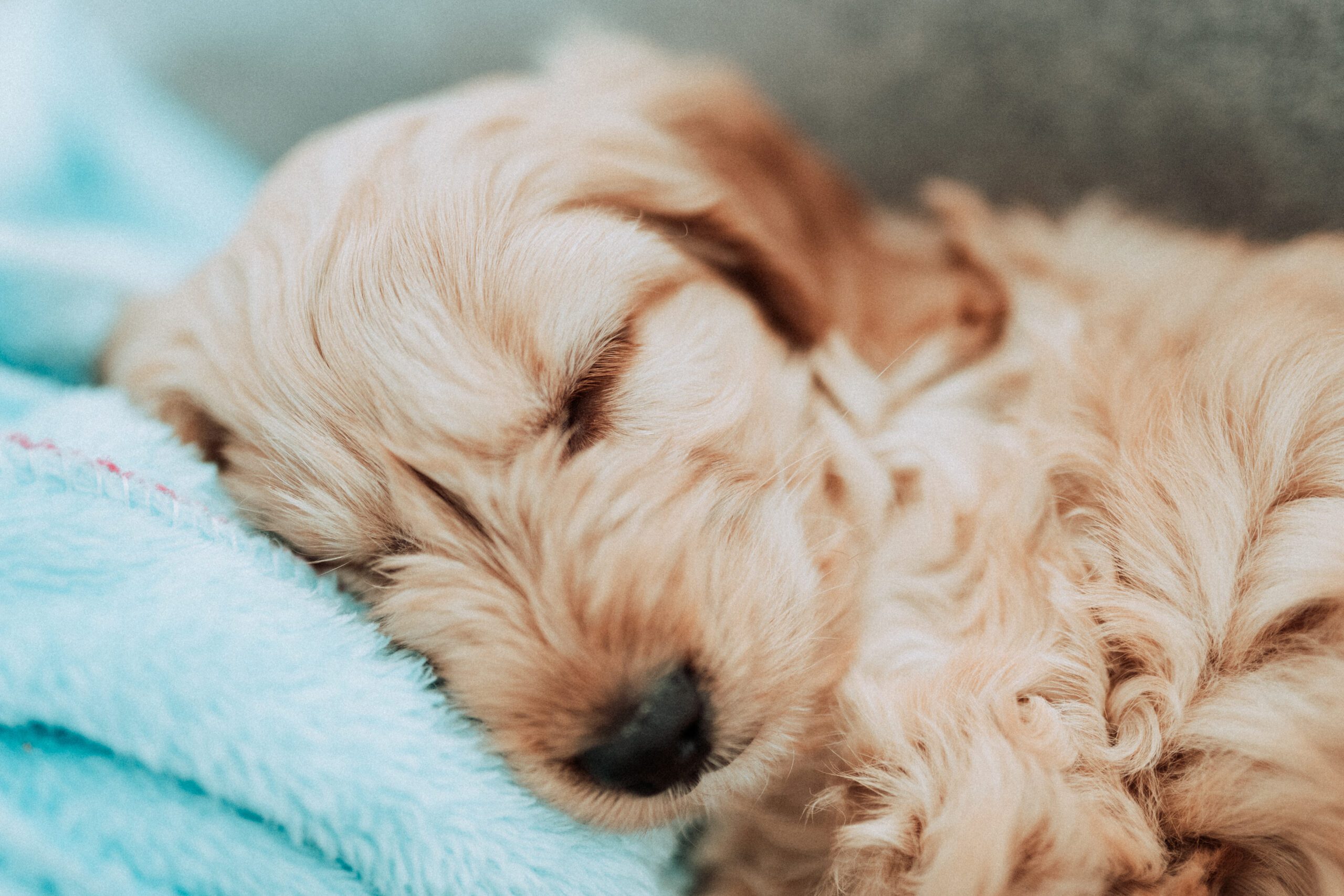
Stop the Evening Chaos: Helping Your Cockapoo Puppy Settle, Focus, and Feel Safe
Freebies:
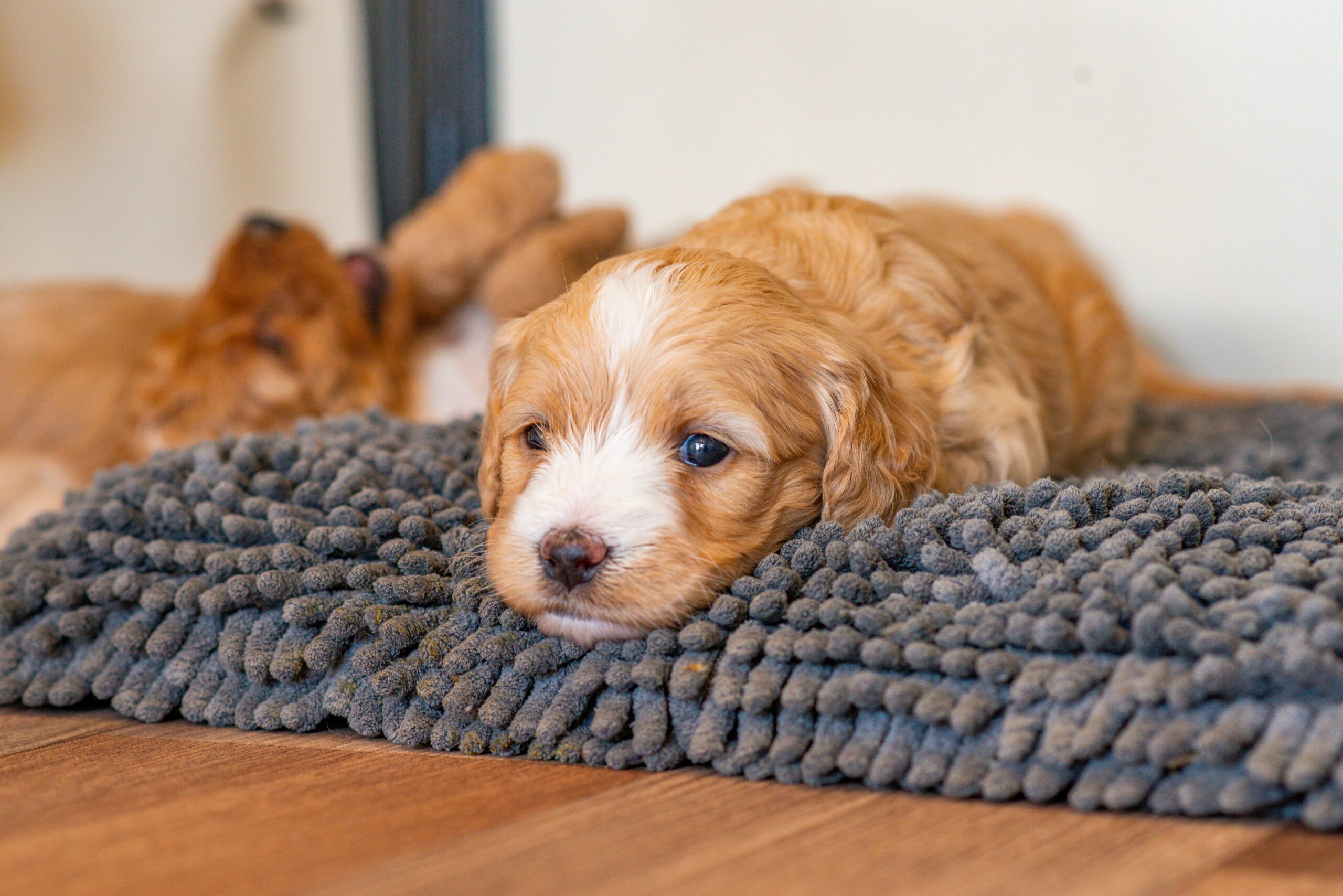
The Cockapoo Puppy Home Alone Guide

Watch on YouTube

How to Stop Cockapoo Puppy Biting (Without Making It Worse)
🎥https://youtu.be/HW3EdsC9Znk