Is the Five Minute Rule of Exercise Really Necessary for Your Cockapoo Puppy?
Posted on 16th April 2025
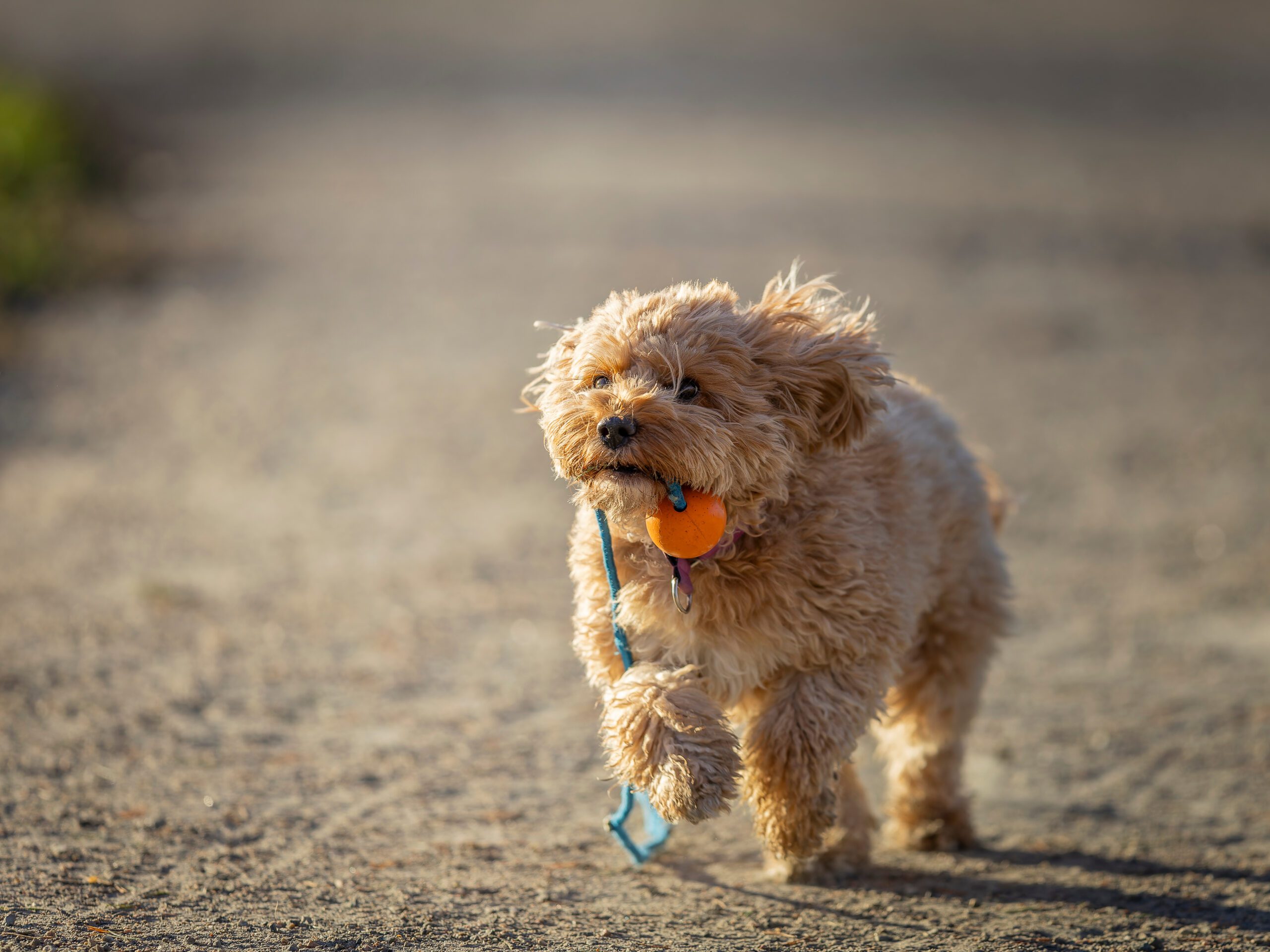
You've read it in every puppy Facebook group: five minutes of exercise per month of age, twice a day, no more. So you set a timer. You watch the clock on every walk. And the second it hits five minutes times your puppy's age, you turn round and head home — even if your Cockapoo is happily sniffing a lamppost and hasn't broken a sweat.
It's stressful. You're meant to be enjoying your puppy, not clock-watching every outing like you're serving a parking meter.
Here's the reframe: the five minute rule isn't really about minutes on a stopwatch. It's a rough proxy for something more important — protecting a growing puppy's joints while they're still developing. Once you understand why that matters, you can stop watching the clock and start giving your Cockapoo the kind of exercise they actually need.
This post covers what's really going on with puppy development and joints, why more walking isn't the answer to a wired puppy, and what to do instead — without a stopwatch in sight.
Why Can't Puppies Walk for Long Periods?
Puppies simply don't have the brain-body co-ordination to walk for hours, and it's not about willpower or fitness. Myelination — the process that lets nerves send fast, co-ordinated signals to muscles — only fully develops in the hind limbs at around three weeks, and co-ordination keeps maturing well beyond that. That's why a puppy's back end often looks less co-ordinated than the front.
Watch a puppy move naturally and you'll see them lollop, the same way a toddler toddles. They don't yet have a clear sense of where their own body is in space, so everything looks a bit clumsy.
Walking for long stretches also takes real muscle strength — not just in the legs, but through the core and neck too. Puppies simply don't have that muscle mass yet, so long walks aren't something they can "push through."
On top of that, puppies grow their long bones at different rates, and rapid growth can bring on growing pains (panosteitis) — much like growing pains in human teenagers. This can make a puppy look stiff, sore, or clumsy for no obvious reason, and it's one of several things that can look like signs your Cockapoo might be in pain. Most puppies won't be able to move their hind legs and forelegs in sync until well over a year old.
Why Does Exercise Risk Puppy Joints?
At the end of a puppy's growing bones sits a layer of cartilage and joint fluid — and this is the part that's vulnerable. Pressure from twisting, jumping, or running on hard or uneven ground can damage that cartilage while it's still developing.
Think of it like a 4-year-old child: you wouldn't hand them heavy weights or sign them up for high-intensity gymnastics. The same logic applies to your puppy. High-impact activities — rough and tumble play, repetitive ball throwing, jumping on and off furniture or walls — all put strain on joints that aren't ready for it. If you're just starting out on walks, 3 Things to Teach Your Cockapoo Puppy Before Their First Walk is worth reading alongside this.
Does My Puppy Need More Walks to Tire Them Out?
It's the instinct every exhausted puppy owner reaches for: if they're this wired, they must need more exercise. But think of a marathon runner in training. The more they run, the fitter they get — but the more they also risk injury. Puppies work the same way. More walking doesn't make a puppy calmer; it just raises the risk of joint strain, without solving the wired behaviour you're trying to fix.
What your puppy actually needs isn't more walking, it's different stimulation — and this is especially true for Cockapoos, who are bright, sensitive dogs that tire out mentally long before they tire out physically. If your puppy seems to spiral rather than settle after exercise, it's worth reading 5 Signs Your Cockapoo Puppy Is Overtired — it's rarely a lack of walks causing it.
How Should I Socialise My Cockapoo Puppy Without Overdoing Walks?
Socialisation is about your puppy getting comfortable with the world around them without feeling overwhelmed — and it doesn't require walking or running at all.
Choose a suitable spot to sit with your puppy and simply watch the world go by: a bench near a school run, a bench near light traffic, even the boot of the car with the door open. Let your puppy observe at their own pace.
This matters because a puppy who's overwhelmed rather than curious can look "difficult" on a walk when they're really just anxious — my guide to Cockapoo anxiety vs. fear goes deeper on telling the two apart.
How Do I Introduce My Puppy to Other Dogs Safely?
With my own dogs, I want them to largely ignore the dogs they pass on a walk and focus on me instead. That means being selective: choose a few calm, known dogs for your puppy to interact with, and let them ignore the rest.
Play with those select friends is fine in short bursts, but keep it controlled — you should always be able to call your puppy out of play when you need to. Keep play to a few select friends only, rather than every dog you meet.
What Is Environmental Enrichment for Puppies?
The more interesting the environment, the more tired your Cockapoo will be after a walk — and the same route every single day is a killer for puppy stimulation. If your puppy seems to explode with energy at the end of a walk rather than settle, that repetitive routine may be part of why; it's a similar pattern to what drives the Cockapoo zoomies.
New places, new smells, new surfaces, new sounds and sights — this is what puppy exercise should really be about. Dogs experience the world primarily through scent, so anything that gets their nose working is doing real mental work.
You can build on this by hiding treats or your puppy's favourite toy for them to find. As they get better at it, you can even teach them to find your keys — genuinely useful in a real emergency.
- Aim for three or four new places a week, not just the same daily loop.
- Let your puppy sniff freely rather than marching them past every interesting smell.
- Hide treats or a toy in the garden or on a walk for a mini scent-work session.
- Vary the surface — grass, sand, woodland, shallow water — to build confidence and body awareness.
Puppies can spend far longer than five minutes per month of age outside, as long as most of that time isn't spent walking or running. My own puppies come everywhere with me, sometimes for a full day out — but they have long sleeps in the car, rest while we sit and chill, and a little training scattered through the day. Plan ahead and give your puppy the right type of exercise, and there's no need to watch the clock at all.
Why This Matters
The five minute rule exists for a good reason: protecting a growing puppy's joints while their body catches up with their enthusiasm. But rules built around a stopwatch miss the bigger picture. What actually protects a puppy long-term is low-impact movement, rich mental stimulation, and calm exposure to the world — not a strict count of minutes.
This is the same principle behind everything in a calm Cockapoo's foundations: it's rarely about doing more, and almost always about doing the right kind of thing. No ball throwing, no jumping, no long-distance running — and no need to clock-watch either.
You're doing a great job!
If you've been anxiously watching the clock on every walk, you're not overthinking it — you're a responsible owner trying to do right by your puppy. But a tired puppy isn't the goal; a puppy who feels settled, curious, and safe in their world is.
Start today: swap one walk this week for a sniffing session in a new spot, or a five-minute treat hunt in the garden. If you'd like a simple, structured way to give your puppy the right mix of rest and stimulation from day one, the Cockapoo Puppy 7 Day Guide is free and walks you through exactly that.
Enjoy your puppy — they grow up real fast.
— Clair
Founder, Cockapoo52
Supporting Blogs:
When should I let my Cockapoo puppy off the lead?
Resources:
The Calm Puppy Reset: Helping Your Cockapoo Puppy Settle, Focus, and Feel Safe
Freebies:
The Cockapoo Puppy 7 Day Guide
Watch on YouTube