3 Things to Teach Your Cockapoo Puppy Before Their First Walk
Posted on 25th June 2026
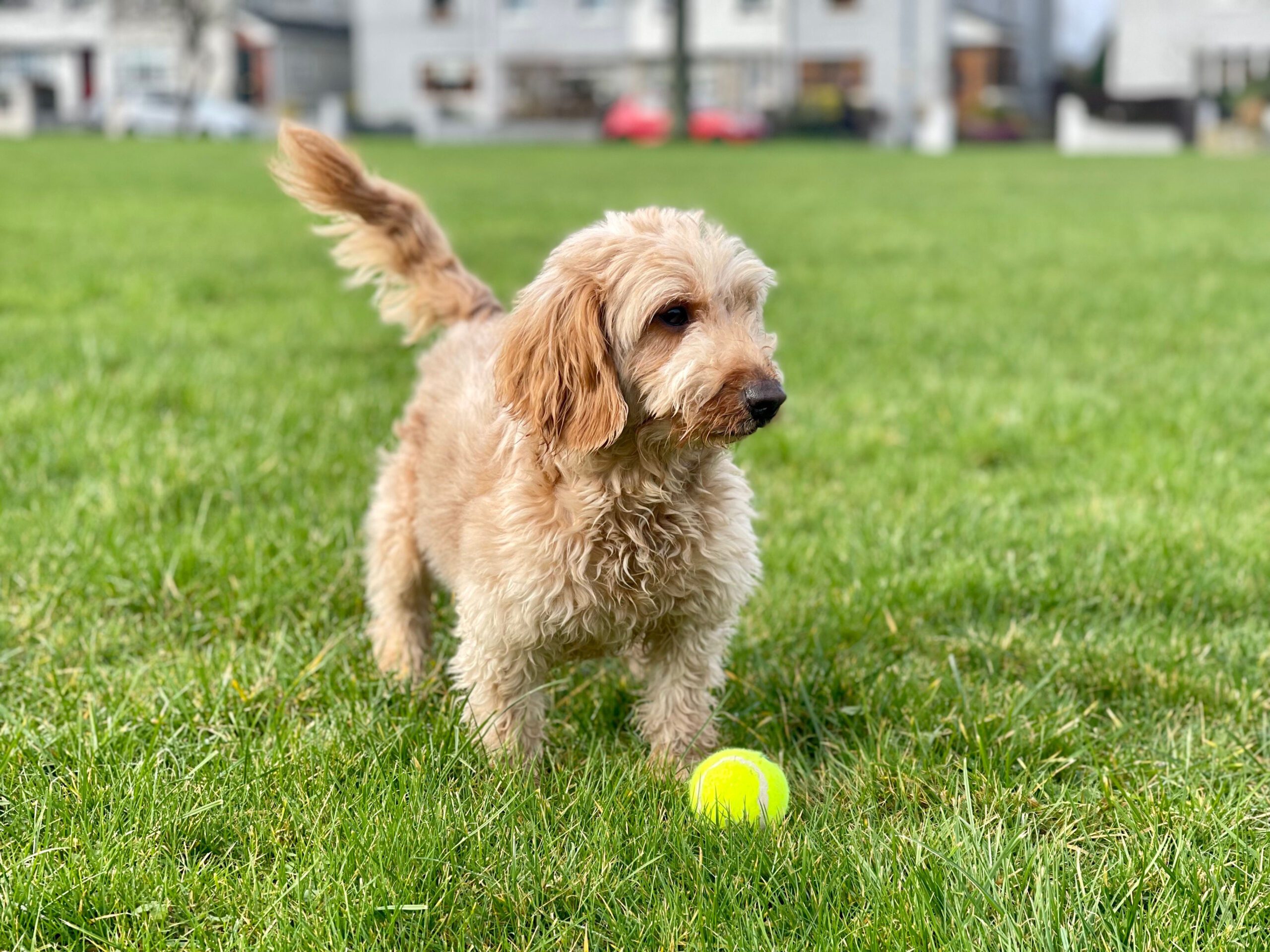
You’ve pictured this moment for weeks. Lead clipped on, front door open, your Cockapoo puppy trotting happily down the street for the very first time.
Then it actually happens — and your puppy sits down on the pavement and won’t move. Or drags backwards toward the house. Or freezes completely the second a car goes past.
Here is the part almost nobody tells you before that first walk: it isn’t really one event. It’s three brand new experiences happening at exactly the same time, in the hardest possible place for a puppy to cope with them.
The good news is that all three are easy to teach — and none of them need to happen outside.
Why Does My Cockapoo Puppy Refuse to Walk on Their First Walk?
This is one of the most common things new Cockapoo owners search for — and the panic behind it is real. You’ve waited for the vaccination all-clear, you’ve imagined this walk for weeks, and then your puppy plants their feet and won’t budge.
It feels like something has gone wrong. Almost always, nothing has.
Think about what you’re actually asking your puppy to do. Wear a harness for the first time. Respond to their name being said outside, with every distraction imaginable competing for their attention. Cope with lead pressure they’ve never felt before. And do all of that while processing cars, strangers, dogs, and a hundred new smells — for the first time, all at once.
That is not a small ask. Most puppies who “refuse” to walk on day one are not being stubborn. They are overwhelmed by everything happening simultaneously — and nobody warned them, or you, that it would feel like this.
If walk one feels overwhelming, it's worth remembering this is just the latest in a string of firsts — much like your puppy's first 7 days at home, where almost everything was new and unfamiliar too. Puppies get through those firsts. They'll get through this one.
The fix is not a better walking technique. It’s separating the three new experiences out, and teaching each one at home, days before the lead ever touches the pavement.
1. Get Your Cockapoo Puppy Used to Their Harness, Lead and Collar — With No Pressure to Go Anywhere
For most puppies, the first time they wear a harness is the same day they go on their first walk. That means the very first thing strapped to their body is immediately followed by the most overstimulating experience of their life so far. No wonder it goes wrong.
Separate the two. Put the harness on in the lounge, days before any walk is planned. Let your puppy wander around in it, sniff their dinner bowl in it, lie down in it. Treat generously while it goes on and while it comes off.
Build up gradually:
- Day one: harness on for thirty seconds, treat, harness off.
- Next few days: longer stretches, worn during calm moments — a chew, a quiet play session, dinner.
- Once your puppy moves around normally in it, attach the lead indoors and let it trail — no holding, no direction, just letting them get used to the feeling.
- Finally, pick the lead up and follow your puppy around the lounge for a minute or two. You are not training loose-lead walking yet. You are just teaching them that the lead being held is not a big deal.
The aim is for the harness to become completely boring. Boring is the goal. Boring means it’s working.
2. Teach Hand Touch — Your Puppy’s Reset Button
Hand touch looks like a small party trick. It isn’t. It is one of the most useful things you will ever teach a Cockapoo puppy, and it earns its place long before the first walk and for years afterwards.
Here’s how to teach it:
- Hold your palm a few inches from your puppy’s nose.
- The instant they touch it with their nose — even out of curiosity — mark it and treat.
- Repeat little and often. A few reps, several times a day, is far more effective than one long session.
- Once it’s reliable indoors, start adding small distractions — ask for it while they’re sniffing a toy, or with another person in the room.
Once this is solid, hand touch becomes your reset button on every walk that follows. Distracted by a smell? Hand touch. Overwhelmed by a passing dog? Hand touch. Need their attention back from a dropped chip on the pavement? Hand touch. It costs you five minutes a day this week. It pays you back for years.
3. Build Name Response — Before You Ever Need It Outside
Name response is not the same as recall, and it doesn’t need to be trained like one. What you’re building here is much simpler: when you say your puppy’s name, they check in with you, even briefly.
That tiny check-in is what gets your puppy’s attention back from a car, a stranger, or another dog on a walk — long before you ever need a full recall.
Build it like this:
- Say your puppy’s name once, in a normal voice, when they are not already looking at you.
- The moment they glance toward you — even for a second — mark it and treat.
- Never repeat the name multiple times before they respond. Say it once, wait, reward any response.
- Practise around mild distractions at home before expecting it to work outside — a toy on the floor, a family member walking past.
Like hand touch, this is something you can build entirely indoors, with zero pressure, before it ever needs to work in the real world.
Get this solid now and it becomes the foundation for the bigger question every owner asks eventually — when should I let my Cockapoo puppy off the lead?
Why This Matters More Than the Walk Itself
Your puppy’s first walk already comes with plenty to process — traffic, strangers, dogs, smells, sounds. None of that is something you can fully prepare for at home. But the harness, the name response, and the hand touch are completely within your control, and they cost you almost nothing to teach in the days before.
Do that preparation first, and the actual walk has one fewer layer of “new” stacked onto it. Your puppy still has plenty to take in — but at least the equipment on their body and the sound of their own name aren’t part of the overwhelm.
This is the same principle behind the handling work I teach before a first groom — the preparation that happens at home, quietly, in the days before, makes the actual event almost a non-event. First walks are no different.
And once you are actually outside, keeping that first walk short and calm matters just as much as the preparation beforehand — the five-minute rule of exercise covers how much is genuinely appropriate at this age.
First Walks That Go Well Aren’t Luck
They’re preparation. Three small skills, taught indoors, with no deadline and no pressure to actually go anywhere. None of it is complicated. All of it matters.
Start this week. A few minutes a day on the harness, hand touch, and their name — and by the time you’re ready for the walk itself, none of it is new.
| Want the next step? Next week’s post covers the walk itself — reading the difference between a stubborn puppy and an overwhelmed one, the truth about the ‘five minutes per month of age’ rule, and what to do when a puppy who walked fine last week suddenly won’t move. Keep an eye on the blog for it. |
If evenings already feel chaotic before you've even tackled the first walk, the Calm Puppy Reset is a quick, practical place to start.
If you want the full picture — sleep, biting, alone time, toilet training, grooming and walks pulled together into one proper plan — that's exactly what Puppy Thrive (coming soon) is built around.
And if you'd rather talk through your specific puppy's situation with me directly, a single 1:1 session or the 4-session 1:1 package are both available if you want ongoing help through this stage.
Clair, Cockapoo52
Supporting Blogs:
The Calm Cockapoo Evening Routine: A Step-by-Step Guide for Settled Nights
Resources:
Stop the Evening Chaos: Helping Your Cockapoo Puppy Settle, Focus, and Feel Safe
Freebies:
The Cockapoo Puppy Home Alone Guide

Watch on YouTube

Why Your Cockapoo Puppy Follows You Everywhere