The Calm Cockapoo Evening Routine: A Step-by-Step Guide for Settled Nights
Posted on 5th June 2026
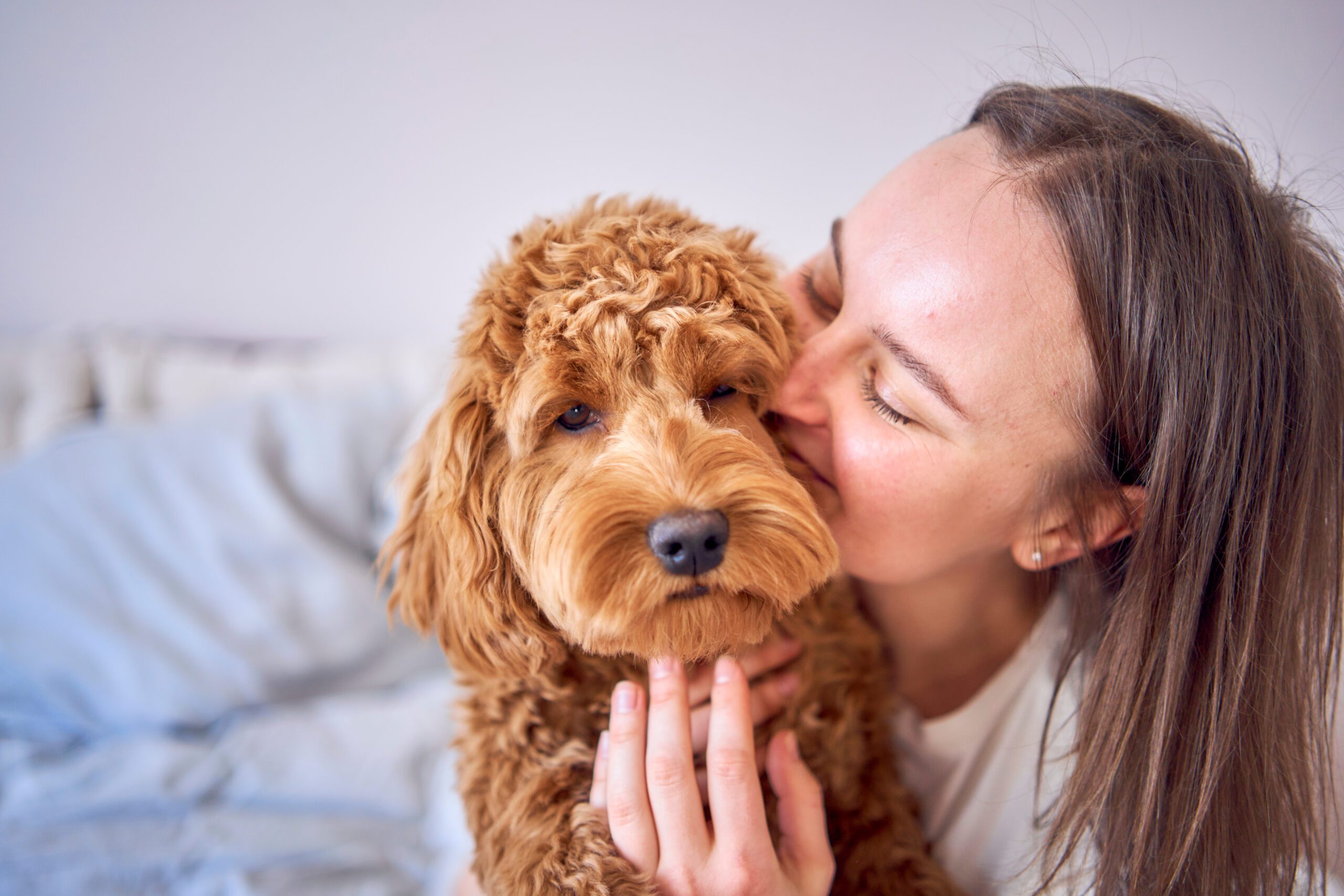
It is 6pm. Your Cockapoo puppy has had walks, training, cuddles and enrichment. And then — out of nowhere — everything falls apart.
The biting starts. The zoomies begin. They launch themselves at the sofa and cannot settle no matter what you try.
Sound familiar? You are not alone. And your puppy is not broken.
What is happening in most of these cases is not a behaviour problem. It is a routine problem. Evenings without a calm, predictable wind-down are almost always harder — for your puppy and for you.
This guide walks you through exactly what a calm Cockapoo evening routine looks like, why each part matters, and the small shifts that make the biggest difference. I have also turned this into a free downloadable checklist — The Calm Cockapoo Evening Checklist — so you can keep it somewhere useful.
Why Do Cockapoo Puppies Get Worse in the Evenings?
Before we get into the routine, it helps to understand what is actually going on.
Cockapoos are sensitive, clever, busy little dogs. They notice everything and stay switched on for long periods — which means by the time evening arrives, many of them are running on empty. But instead of winding down naturally, an overtired Cockapoo often tips into chaos instead.
You might see:
- Biting that seems to come out of nowhere
- Frantic zoomies
- Inability to settle
- Digging beds and sofas
- Barking or grabbing clothes
This is not naughtiness. This is a puppy whose nervous system has hit its limit. Stimulation stacks — every walk, every visitor, every exciting interaction adds to the load your puppy is carrying. And when they hit the threshold, rest does not come naturally.
I have written a full post on this if you want to go deeper: why your Cockapoo puppy gets worse in the evenings.
The Calm Cockapoo Evening Routine: Four Stages
The evening routine I use and recommend is built around four stages. Each one builds on the last. The goal is not to shut your puppy down — it is to help their nervous system decelerate gently so that sleep feels safe and achievable.
Stage 1: Before Dinner — Set the Stage
What happens before dinner matters more than most people realise. If your puppy has been on a high-stimulation afternoon — a long walk, visitors, free-running in the garden — the evening is going to be harder.
Before dinner, the aim is:
- Avoid over-exciting play late in the day
- Keep any walks or sniffing calm rather than overstimulating
- Make sure your puppy has had enough daytime sleep (more on this below)
- Prepare a calming chew, lick mat or stuffed Kong for use after dinner
That last one is worth planning ahead. Having something ready means you are not scrambling at the worst moment.
Stage 2: After Dinner — Engage Calmly
After dinner is often when owners reach for the tug toy. Please do not.
After-dinner energy in puppies looks like excess, but it is almost always the opposite — it is a nervous system struggling to decelerate. Exciting play at this point adds fuel to a fire you are trying to put out.
Instead, think gentle brain work:
- Scatter feeding — a handful of kibble on the garden lawn or a snuffle mat
- A simple “find it” game — small and quiet
- A touch or hand target exercise — 5 minutes of calm reward-based training
- A lick mat or stuffed Kong — prepared earlier, offered now
Keep voices lower and movement calmer. You set the tone for the room. If you are busy and loud, your puppy will match that.
Avoid rough play and frantic games. This is not the time.
Stage 3: Wind Down — Help Them Decompress
This is the stage most owners skip, and it is probably the most important one.
Winding down is not the same as putting your puppy to bed. It is the transition — the decompression window that bridges the active evening and sleep. Without it, you are trying to go from 60mph to zero in one step, and that rarely works.
During wind-down:
- Lower the lights where possible — bright overhead lighting keeps the nervous system alert
- Reduce your puppy’s access to the whole house — a smaller, quieter space helps
- Encourage calmness near you rather than away from you
- Offer a toilet trip before overtiredness kicks in — an overtired puppy often cannot hold their bladder, so get outside before the chaos starts
- Use calm strokes or gentle interaction if your puppy enjoys it
This is also the moment where the lick mat or chew really earns its place. Licking and chewing are naturally calming — they activate the parasympathetic nervous system and bring arousal levels down. Five to ten minutes of this will do more than any amount of “settling” commands.
Stage 4: Bedtime — Settle for Sleep
By the time you reach this stage, if you have moved through the earlier ones, your puppy should be noticeably calmer than they would be without the routine.
Bedtime works best when it is:
- Predictable — the same sequence every night so your puppy’s nervous system starts anticipating sleep
- Calm — keep interactions quiet and low-key in the final few minutes
- Clear — guide your puppy to their safe sleep space without fuss
Avoid restarting play or excitement. If your puppy gets a second wind, do not engage with it. One of the most common mistakes I see is owners responding to late-evening zoomies by playing back — which restimulates everything you have just spent an hour winding down.
Remember: overtired puppies often fight sleep. That is not a sign they are not tired enough. It is a sign they are too tired. The routine is what helps them past that point.
How Much Sleep Does a Cockapoo Puppy Actually Need?
More than you think. Young Cockapoo puppies need up to 18–20 hours of sleep in every 24. Not rest. Not quiet time. Sleep.
If your evenings are chaos, the first question to ask is: has my puppy actually slept enough today? Most of the time, the honest answer is no.
The difficult part is that Cockapoos will not naturally choose sleep when they are overtired and overstimulated. They need you to create the conditions that allow rest to happen. That is what the evening routine is doing — it is building the bridge to sleep, not just hoping your puppy finds it.
For the full picture on sleep — how much they need at each age, the most common mistakes, and exactly how to build better naps into your day — the free Cockapoo Sleep Guide covers everything.
Tired is not the goal. Rested is.
What Time Should a Cockapoo Puppy Go to Bed?
There is no single answer here, but most Cockapoo puppies do best with an earlier, more predictable bedtime than owners expect.
A good rule of thumb: if the chaos is starting at 6pm, your puppy’s wind-down should be beginning at 5:30pm at the latest. For many young puppies, settling by 7–8pm is completely appropriate — and often makes the following morning easier too.
Consistency matters more than the exact time. Your puppy’s nervous system learns to anticipate sleep when the routine is predictable. A puppy who goes to bed at 7:30pm every night will settle faster than one who goes at different times depending on what is happening in the house.
Why Won’t My Cockapoo Puppy Settle at Night?
If your puppy reaches bedtime still wired, one or more of the following is almost always the cause:
- Not enough sleep during the day — an overtired puppy is harder to settle, not easier
- Too much stimulation in the hours before bed
- No wind-down transition — going straight from active to “sleep now”
- Exciting play too late in the evening
- Inconsistent routine — different every night, so nothing signals that sleep is coming
The answer is almost never more exercise. I know that sounds counterintuitive, but a Cockapoo puppy who cannot settle is not a dog who needs to be more tired. They are a dog who needs more structure, more calm, and more predictability.
If this is where you are right now, the Calm Puppy Reset was designed specifically for this stage — evenings that feel impossible, biting that spikes later in the day, a puppy who cannot switch off.
The Calm Evening Checklist: Your Simple Reference
Everything above is captured in the free Calm Cockapoo Evening Checklist, which you can download and keep on your fridge, save to your phone, or share with anyone else in the house helping with puppy routines.
It covers all four stages — Before Dinner, After Dinner, Wind Down, and Bedtime — plus the six most common normal-but-alarming evening behaviours so you know what to look for and what is actually going on when your puppy starts climbing the walls at 7pm.
It is completely free. No strings.
You Are Not Failing
This stage is hard. Evening chaos in Cockapoo puppies is one of the most common things owners struggle with — and one of the most misunderstood.
You have not ruined your puppy because evenings are difficult right now. You have not missed something obvious. You are dealing with a sensitive, clever little dog who has genuinely not yet learned how to switch themselves off.
The routine helps. The checklist helps. And most of all, understanding that this is a nervous system in need of support — not a dog misbehaving — changes everything.
Start tonight. Lower the lights a little earlier. Put the tug toy away after dinner. Try the lick mat. Just one change.
That is how calm Cockapoo owners are made. One small, doable shift at a time.
— Clair
Founder, Cockapoo52
Supporting Blogs:
The Calm Cockapoo Evening Routine: A Step-by-Step Guide for Settled Nights

Resources:
Stop the Evening Chaos: Helping Your Cockapoo Puppy Settle, Focus, and Feel Safe
Freebies:
The Cockapoo Puppy Home Alone Guide

Watch on YouTube

Why Your Cockapoo Puppy Follows You Everywhere
Still dealing with the biting?
If you're here, chances are it's still happening. Take the free Puppy Biting Quiz to find out exactly where your puppy sits — and what actually helps next.