Why Does My Cockapoo Puppy Chew Everything?
Posted on 14th August 2026
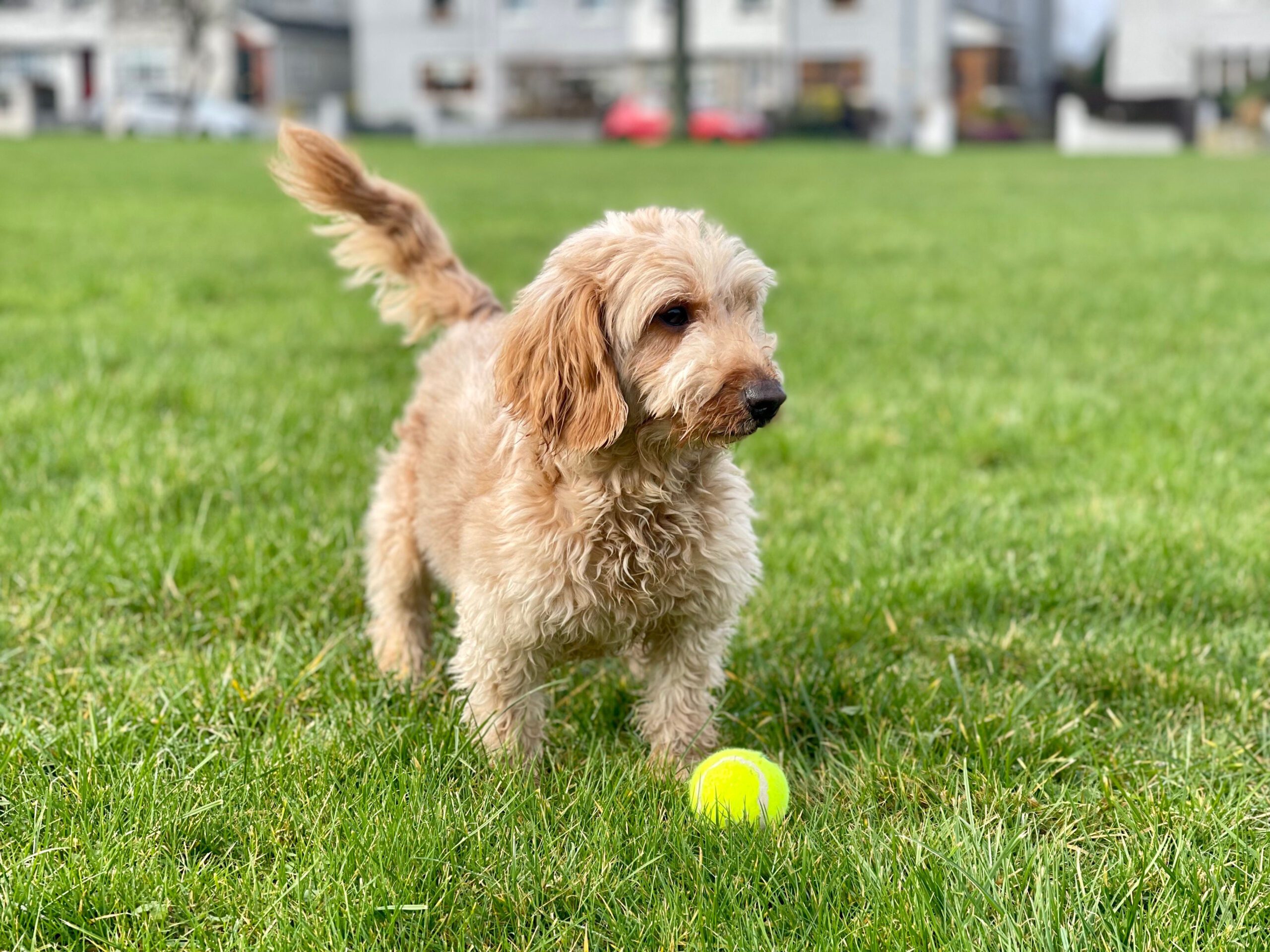
You pictured this part going differently — a puppy stretched out with a proper chew toy while you get on with your evening. What you’ve actually got is a shredded trainer, a corner missing from the skirting board, and a puppy eyeing up the sofa arm the second your back’s turned.
It can feel personal. Like they know it’s your favourite pair, your good rug, the one thing you asked them not to touch. They don’t. Chewing is one of the most normal, most necessary things your Cockapoo puppy does, and almost none of it is about defiance.
The tricky part is that “chewing” isn’t one behaviour — it’s several, wearing the same disguise. Teething discomfort, curiosity, boredom, overtiredness all look identical from the outside, but they need slightly different responses. Treating them all the same is usually why the chewing isn’t easing off.
Here’s what’s actually behind it, how long it tends to last, when it’s worth a vet check, and what to do instead of just buying another toy they’ll walk straight past.
Is My Cockapoo Puppy Teething, or Just Being Naughty?
There’s no such thing as naughty chewing in a puppy under a year old. What looks like defiance is almost always one of these:
- Teething discomfort — new teeth pushing through sore gums, and chewing relieves the pressure
- Investigating the world — puppies don’t have hands, so texture, taste and give are tested with the mouth
- Boredom or under-stimulation — an under-occupied puppy finds their own entertainment, and it’s rarely the entertainment you’d choose
- Occasionally, a diet gap — if chewing seems unusually intense or non-stop, it’s worth a quick word with your vet to rule this out
None of these are a training failure on your part. They’re a puppy doing exactly what puppies are built to do.
How Long Does Cockapoo Puppy Chewing Last?
There isn’t a single day this switches off, but there is a rough shape to it:
- 3–5 months: baby teeth start falling out
- By around 7 months: adult teeth are in and settling
- 7–12 months: chewing can flare up again as those new adult teeth bed in — adolescence, not a relapse
- Up to 1–2 years: general exploratory chewing (the “everything goes in the mouth” phase) can continue well past teething, easing gradually rather than stopping outright
If your puppy’s chewing has crept back up recently, check their age against this before assuming something’s gone wrong. It’s very likely just the next stage, not a step backwards.
Still dealing with the biting?
If you're here, chances are it's still happening. Take the free Puppy Biting Quiz to find out exactly where your puppy sits — and what actually helps next.
Is It Normal for My Puppy’s Gums to Bleed When They Chew?
A little blood on a chew toy during teething, roughly 12–16 weeks old, is usually completely normal. New teeth pushing through will occasionally nick the gum on the way.
Worth checking with your vet if: the bleeding is heavy or frequent rather than occasional spotting, your puppy’s gums look swollen or their breath has changed, or your puppy is 8 months or older and still bleeding on chews — by that age the adult teeth should be settled, so it’s more likely to point to a dental issue than teething. My guide to five signs your Cockapoo might be in pain goes into more of the general signs worth watching for, if you want the fuller picture.
Why Does My Cockapoo Puppy Chew More at Night or When They’re Overtired?
Because an overtired puppy isn’t winding down — they’re wired up. And chewing is one of the places that comes out.
When a puppy goes too long without proper sleep, their body doesn’t just get tired and stop. It produces stress hormones that give a kind of second wind, making it harder to settle, not easier. That can look like biting, chewing on the nearest thing, or generally seeming impossible to calm down, especially in the evening. I’ve written more on why your Cockapoo puppy gets worse in the evenings if this sounds familiar.
This is where “tired is not the goal, rested is” earns its place. A puppy who’s had proper rest across the day chews because they’re a puppy. A puppy who’s overtired chews because they can’t regulate anything else, and the nearest table leg takes the hit. If you’re not sure whether overtiredness is playing a part, my piece on 5 signs your Cockapoo puppy is overtired is worth a read alongside this one.
In practice: keep an eye on total naps across the day, not just night sleep. Start winding down 30 minutes before bed rather than going from full speed to lights out. And if building that routine from scratch feels like the missing piece, the free Cockapoo Sleep Guide walks through it step by step.
Supporting Blogs:
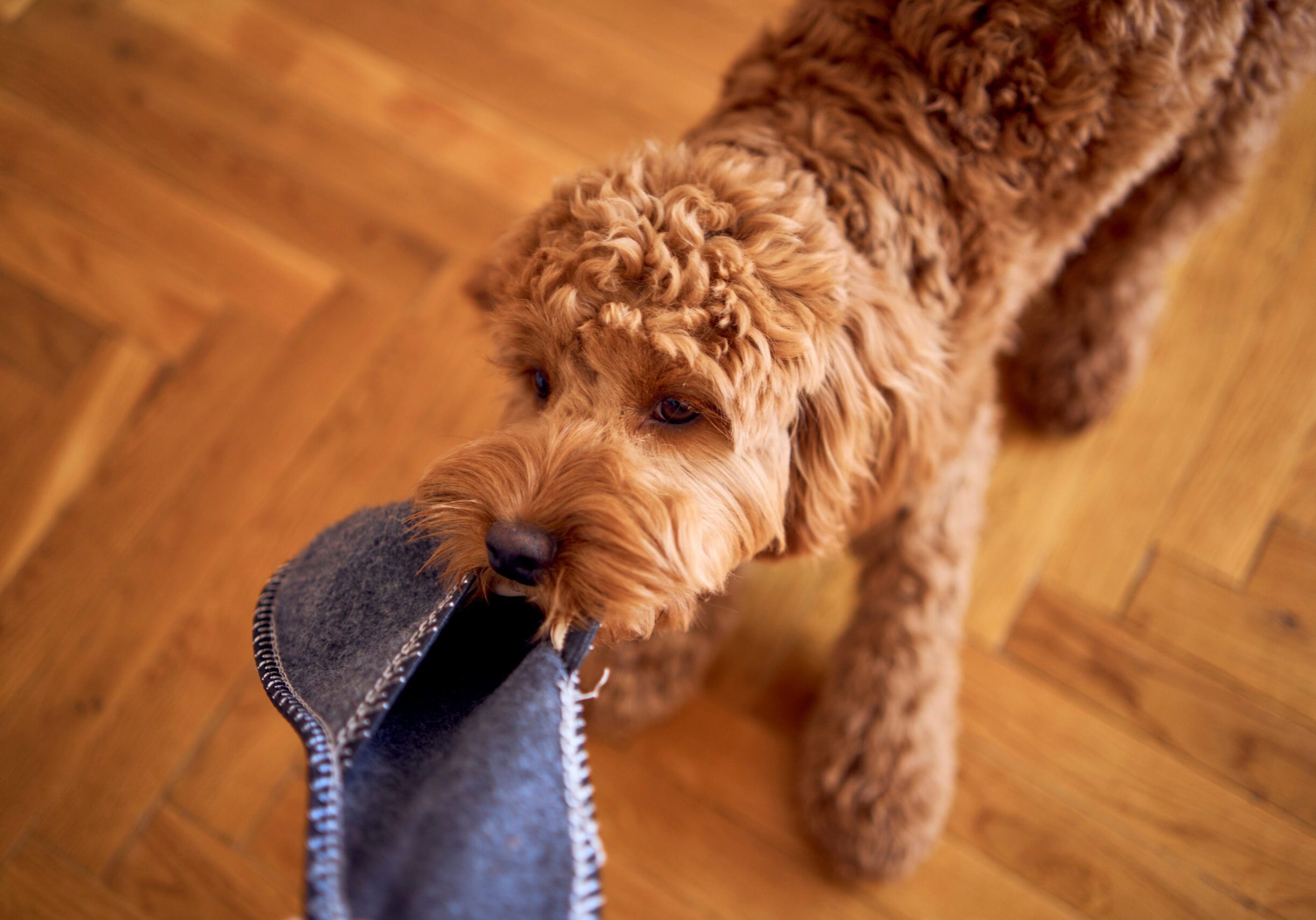
Why Cockapoo Puppies Bite During Play (and How to Stop It)

Resources:
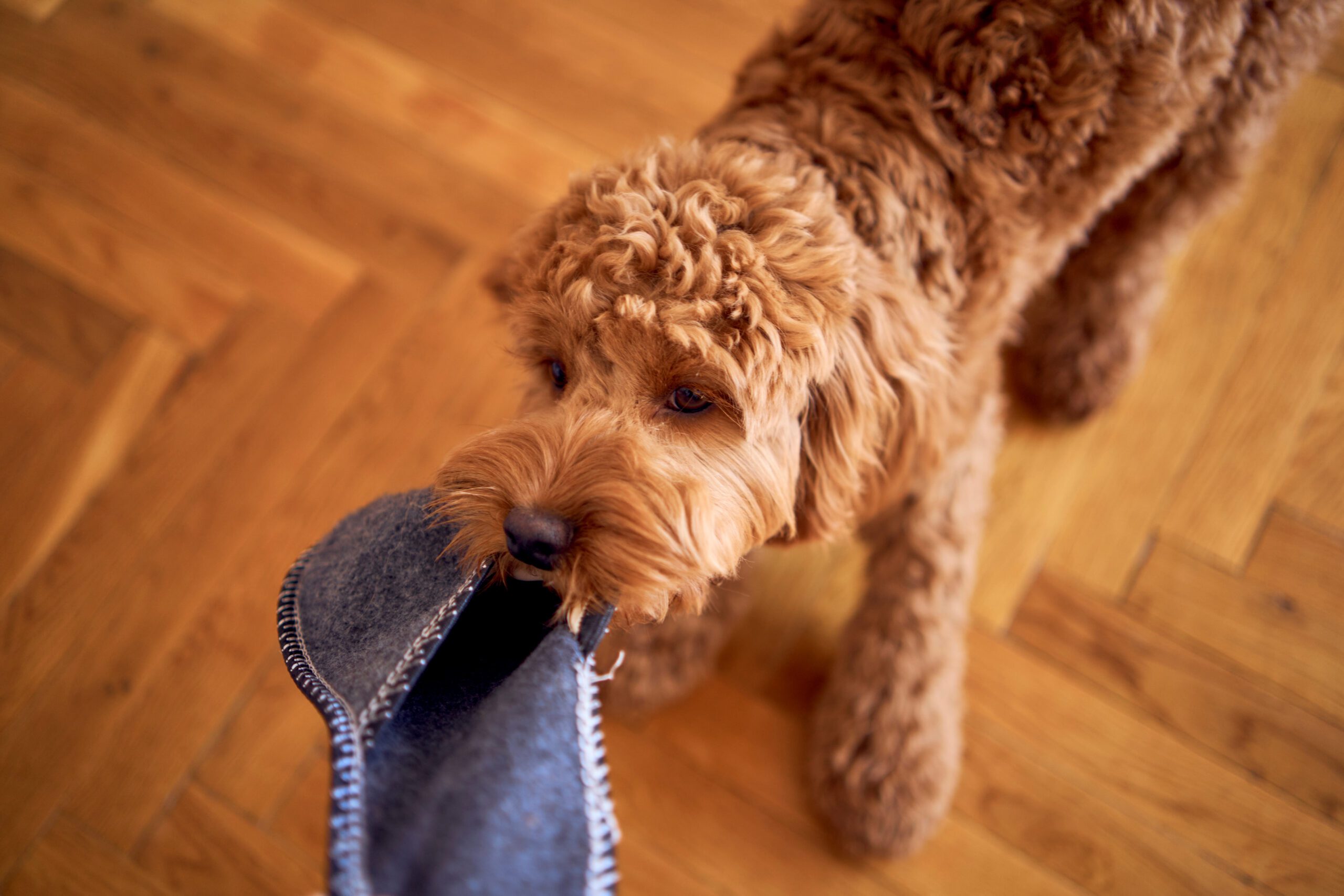
The Cockapoo Puppy Biting Toolkit
Freebies:

The Cockapoo Specific Sleep Training Guide

Watch on YouTube

How to Stop Cockapoo Puppy Biting (Without Making It Worse)
How Do I Stop My Cockapoo Puppy Chewing Furniture?
You won’t stop chewing altogether, and trying to is the wrong goal. What you can do is make the right things far more interesting than the wrong things.
- Offer real variety — rubber, rope, fabric, frozen textures, not just one toy on repeat
- Redirect calmly the second you catch them on furniture — swap the item, don’t make it a confrontation
- Manage the space with gates, pens, or supervision rather than relying on willpower, yours or theirs
- Rotate toys weekly so nothing goes stale and boring
- Use a frozen chew as both teething relief and a genuine calming tool, not just something to keep them busy
Why This Matters
Chewing, mouthing, biting — they can look like separate problems needing separate crackdowns, but they’re usually the same puppy working through the same things: a mouth that’s still their main way of exploring, energy that needs somewhere to go, and rest that isn’t quite where it needs to be yet. Foundations before tricks applies here as much as anywhere. Get the rest and the management right, and a lot of the chewing settles as a side effect, not because you fought it into submission.
If chewing is turning up alongside biting in your house, especially the overtired, can’t-settle kind, the Puppy Biting Toolkit works through the same foundations from the biting side, and most of it carries straight across.
Your Puppy Isn’t Being Naughty, They’re Doing Exactly What Puppies Do
The sofa arm isn’t a verdict on your training. Your puppy isn’t broken, and you haven’t missed something everyone else knows. Chewing is loud, visible, and inconvenient, which makes it feel bigger than it is.
One thing to try tonight: tuck the high-energy toys away 30 minutes before bed and offer one calm chew instead. See what it does to the last half hour of the evening.
— Clair
Founder, Cockapoo52