Your Cockapoo Puppy's Teething Timeline: What to Expect, Month by Month
Posted on 21st August 2026

Last week's post covered why your Cockapoo puppy chews everything in sight. This week is the other half of that story: what's actually happening inside that mouth, and how to make sense of the mess it leaves behind.
You've counted the same chewed slipper for the third time this week. You've noticed that gorgeous “puppy breath” from a few weeks ago has turned into something a bit less gorgeous. Maybe you've even found a tiny white tooth lying on the kitchen floor and felt a small jolt of panic — is that meant to happen?
It is. Your Cockapoo puppy is going through one of the biggest physical changes of their first year — swapping an entire mouth of teeth in the space of a few months. Almost all of it is completely normal. A small part of it is worth knowing how to check for, because it's the kind of thing that's easy and cheap to fix early, and much harder once it's been missed.
Here's the full timeline, what's normal for breath and dental health along the way, and how to spot the one thing — retained baby teeth — that genuinely needs a vet's eye.
How Long Does Cockapoo Puppy Teething Last?
Start to finish, teething runs from around 2–3 weeks old to roughly 6–7 months old — though it's really only from the point your puppy comes home that you'll see any of it. Broken down:
- 2–3 weeks: the first baby teeth break through (this happens before you bring your puppy home, so it's one for the breeder to notice).
- 6–8 weeks: a full set of 28 baby teeth is in. This is roughly where your Cockapoo is when you collect them.
- 12–16 weeks: baby teeth start falling out and adult teeth push through behind them. This is the heaviest chewing stretch of the whole process.
- 6–7 months: all 42 adult teeth are in and teething is essentially done, though it can run on a little longer in some individual dogs.
Teeth come through in a set order: incisors (the small front teeth) first, then canines (the pointy ones), then premolars, and finally molars — which have no baby-tooth version and appear for the first time during this stage.
It's not a coincidence that the heaviest chewing overlaps almost exactly with the 12-week-to-6-month window — the itching, aching gums that come with losing and regrowing a full set of teeth are a big part of what drives the chewing behaviour we covered last week.
Why Does My Cockapoo Puppy's Breath Suddenly Smell?
A bit of sour or metallic breath during the heaviest tooth-loss weeks is normal. Losing teeth means a little blood, some gum inflammation, and a shift in the bacteria living in your puppy's mouth — none of it pleasant, all of it temporary.
The general rule: a change in breath that clears up within a week or two is teething. A change that sticks around longer than that is worth a proper look.
Signs it's worth booking a vet check rather than waiting it out:
- Breath that stays strongly foul for more than two weeks
- Gums that look red, swollen, or bleed when you gently touch them
- Pawing at the mouth, or dropping food while eating
- Chewing only on one side, or seeming reluctant to chew at all
It's genuinely unusual for a young puppy to have proper dental disease — they simply haven't had time to build up the plaque and tartar that cause it in adult dogs. So persistent bad breath is more often a sign of something specific, like a retained tooth or discomfort, rather than “just teething.” If your puppy seems off in themselves alongside it, my guide to five signs your Cockapoo might be in pain is worth a read too.
Still dealing with the biting?
If you're here, chances are it's still happening. Take the free Puppy Biting Quiz to find out exactly where your puppy sits — and what actually helps next.
What Are Retained Baby Teeth in Cockapoo Puppies?
A retained baby tooth is one that hasn't fallen out even though the adult tooth behind it is already coming through. For a short window that overlap is normal — but a baby tooth and its adult replacement should never sit in the same spot for long. If you can see (or feel) two teeth trying to occupy the same space, that's a retained tooth.
It's most common between 4 and 7 months old, and the canines — the long, pointy ones — are the usual culprits. It matters more than it might seem:
- It traps plaque and food between the two teeth, which speeds up dental problems later
- It can push the incoming adult tooth into the wrong position, causing a misaligned bite
- Left untrapped, orthodontic problems can start within two weeks of the adult tooth breaking through
- Occasionally the adult tooth gets trapped under the gum entirely, which can lead to a painful cyst in the jaw
The fix is straightforward: a vet extracts the retained baby tooth, ideally as soon as it's clear it isn't coming out on its own. Caught early, the adult tooth will usually drift back into its correct position by itself. Many owners time this to coincide with spay or neuter surgery around 6–7 months, so it's one anaesthetic rather than two.
Cockapoo mouths are easy to overlook because of all that lovely facial fur — the beard and lip fringe can hide a double tooth completely. A quick, deliberate look under the lip during this stage catches things a passing glance won't.
Why Does My Cockapoo Puppy Chew More at Night or When They’re Overtired?
Because an overtired puppy isn’t winding down — they’re wired up. And chewing is one of the places that comes out.
When a puppy goes too long without proper sleep, their body doesn’t just get tired and stop. It produces stress hormones that give a kind of second wind, making it harder to settle, not easier. That can look like biting, chewing on the nearest thing, or generally seeming impossible to calm down, especially in the evening. I’ve written more on why your Cockapoo puppy gets worse in the evenings if this sounds familiar.
This is where “tired is not the goal, rested is” earns its place. A puppy who’s had proper rest across the day chews because they’re a puppy. A puppy who’s overtired chews because they can’t regulate anything else, and the nearest table leg takes the hit. If you’re not sure whether overtiredness is playing a part, my piece on 5 signs your Cockapoo puppy is overtired is worth a read alongside this one.
In practice: keep an eye on total naps across the day, not just night sleep. Start winding down 30 minutes before bed rather than going from full speed to lights out. And if building that routine from scratch feels like the missing piece, the free Cockapoo Sleep Guide walks through it step by step.
Supporting Blogs:
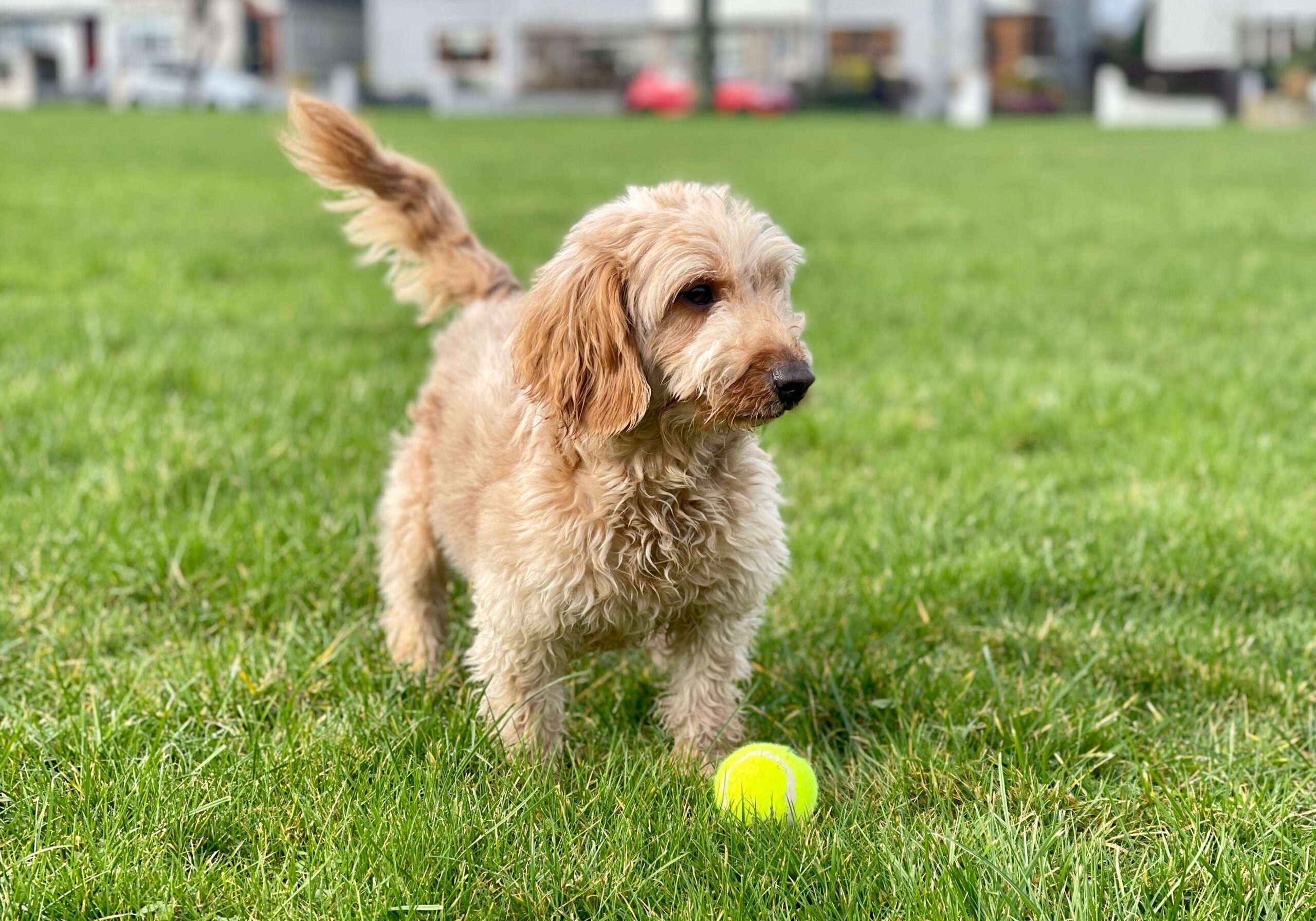
Why Does My Cockapoo Puppy Chew Everything?
Resources:
The Cockapoo Puppy Biting Toolkit
Freebies:

The Cockapoo Specific Sleep Training Guide

Watch on YouTube

How to Stop Cockapoo Puppy Biting (Without Making It Worse)